In-house product — our fourth shipped tool
Start with a shape.
Leave with a real file.
BakaroLab teaches solid modelling to designers aged 13 to 17, in a browser tab. It opens with shapes you can drag, adds millimetres the moment the work needs them, says plainly whether the result will print, and hands back a file the designer owns. The geometry underneath is the real thing — not a renderer imitating one.
One model, ten steps
Thirteen shapes become an aeroplane.
Nothing below is a template or a finished example loaded from a gallery. It is one model assembled from primitives in the same studio a student opens on their first day, and it ends as a single joined solid that can still be taken back apart.
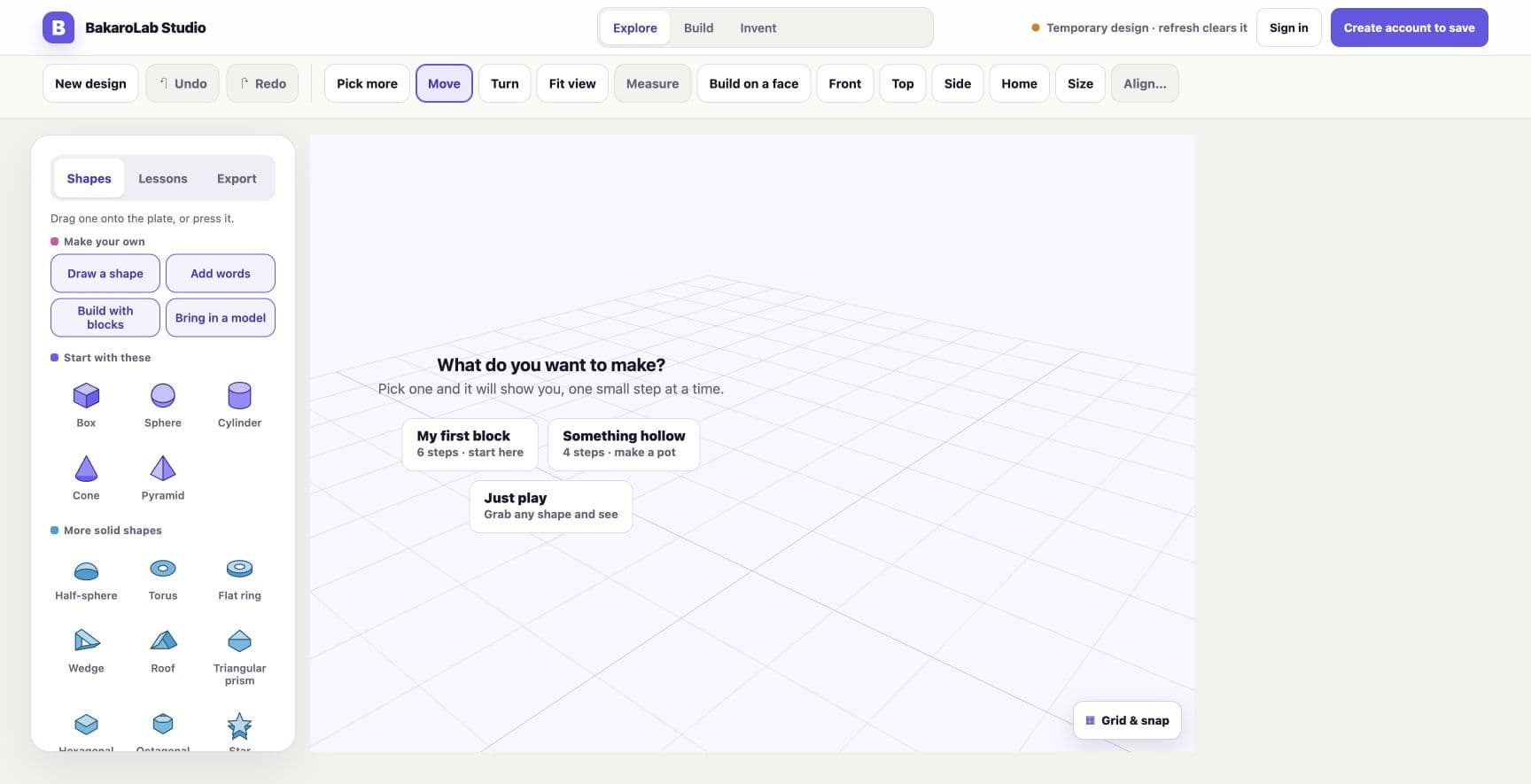
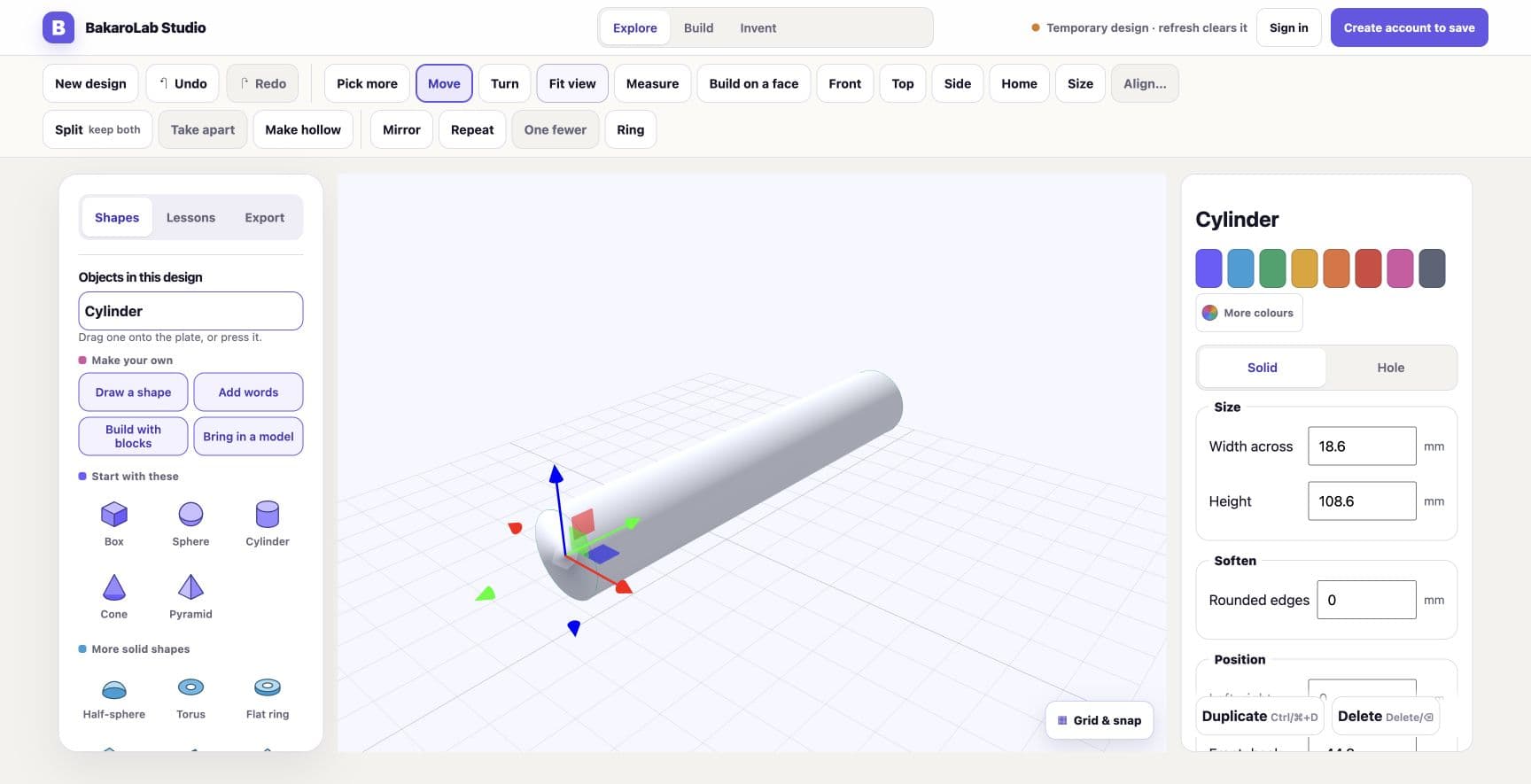
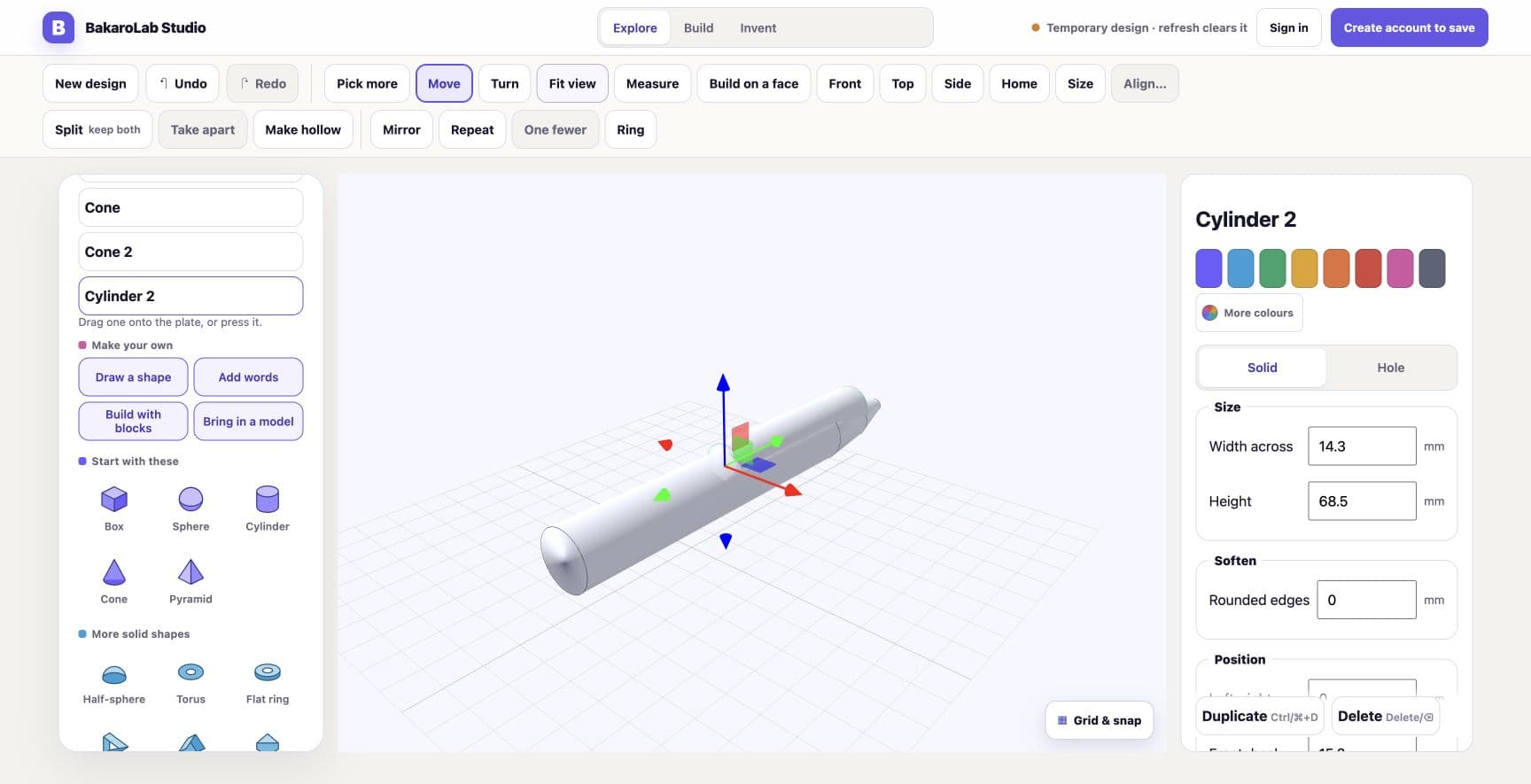
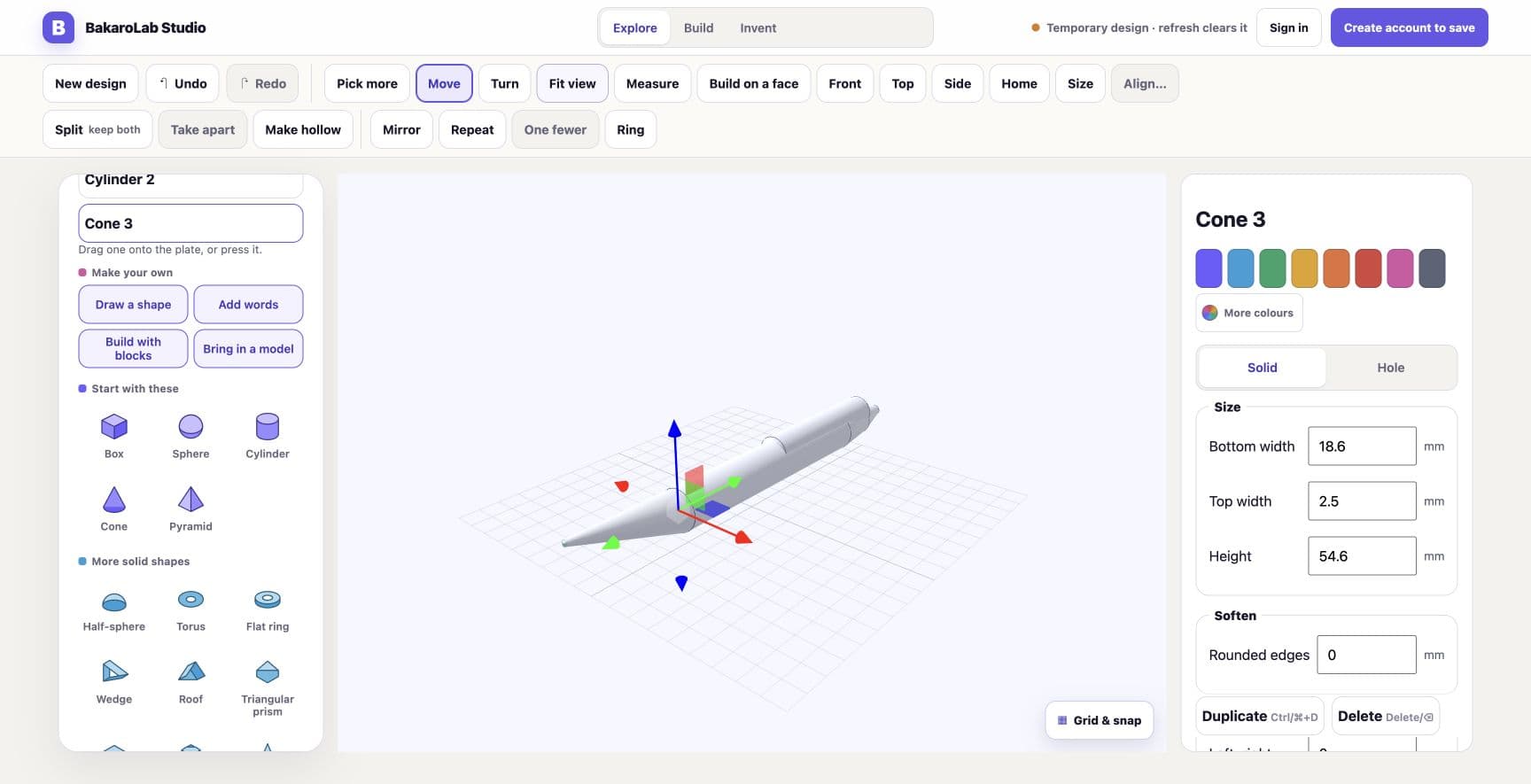
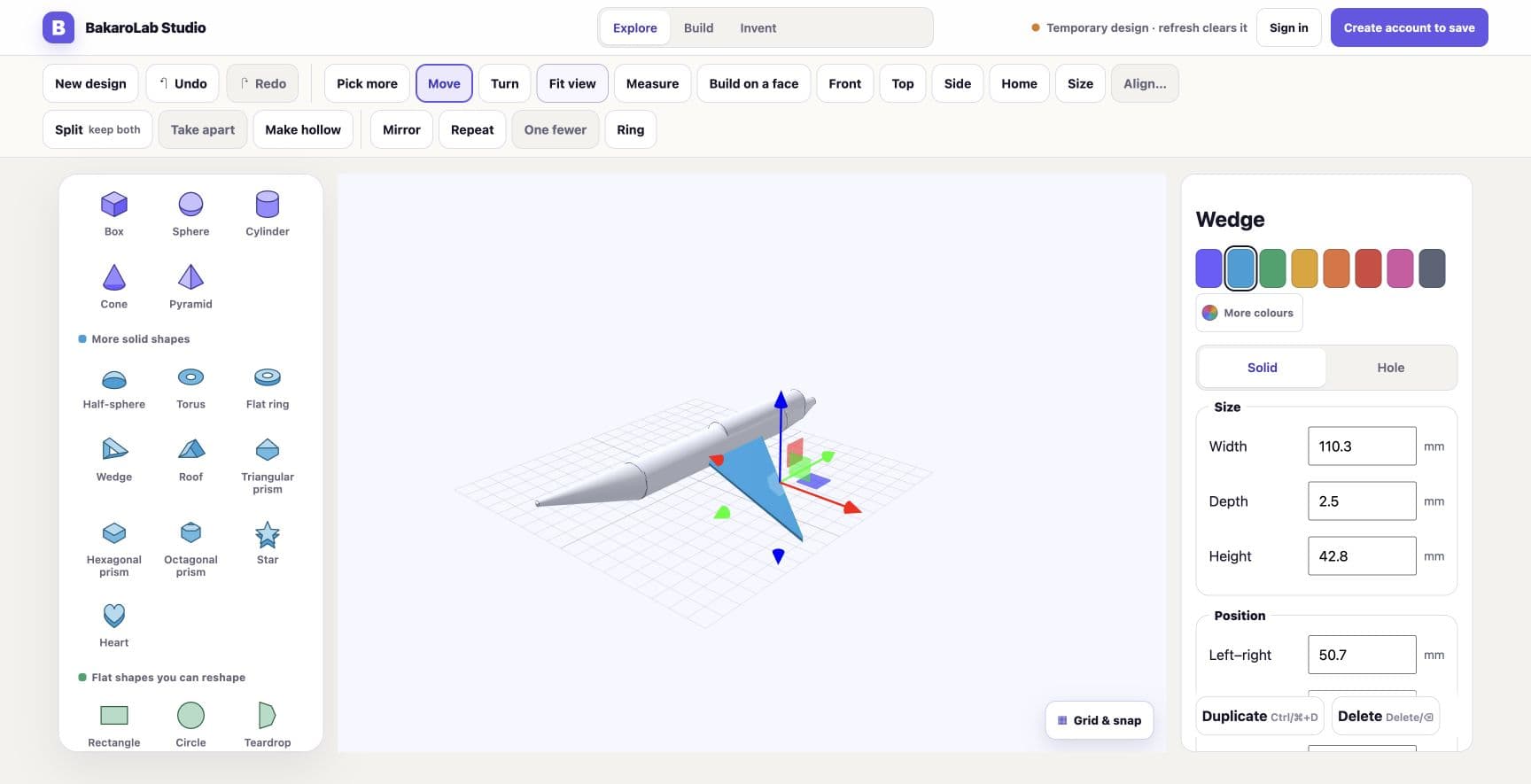
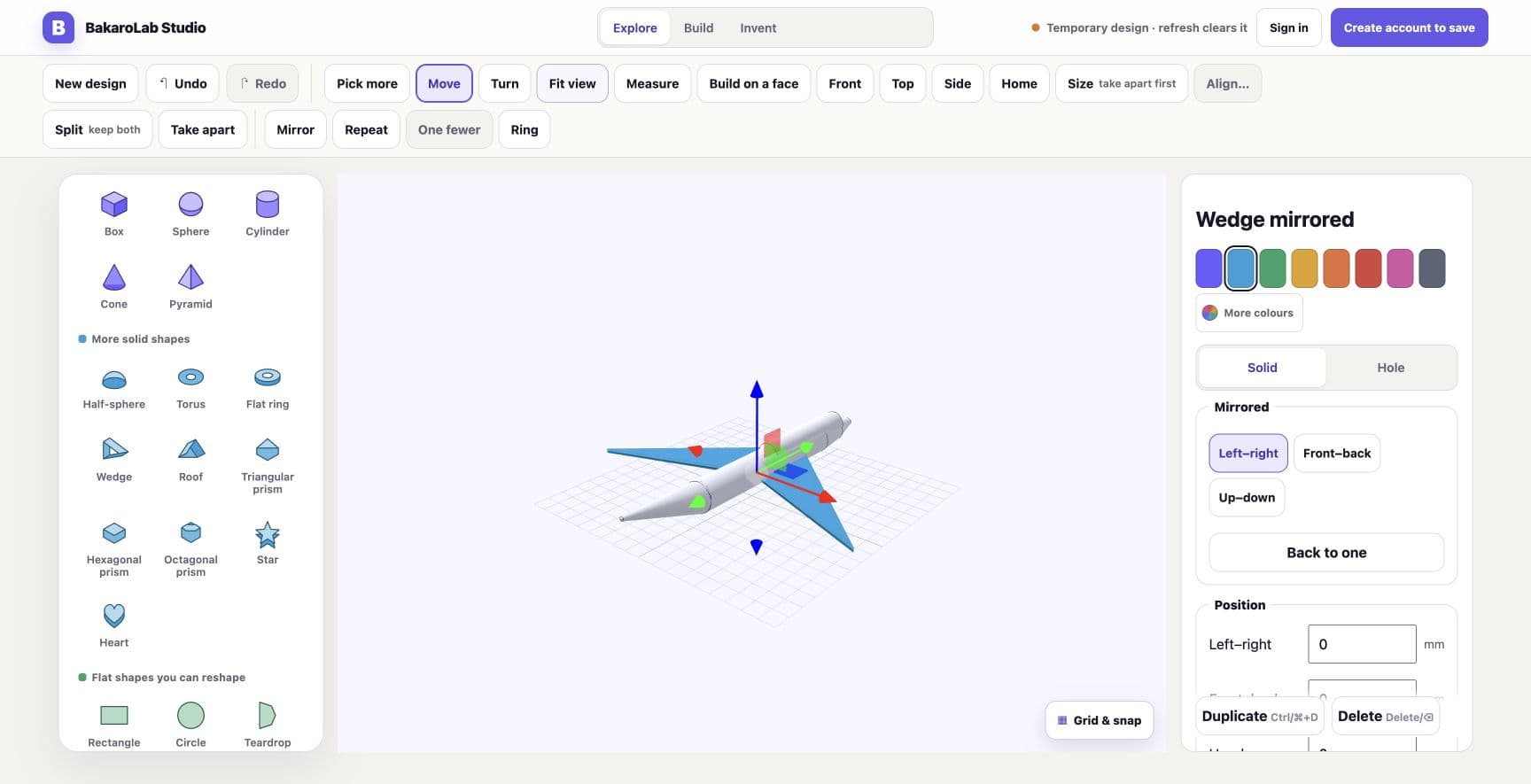
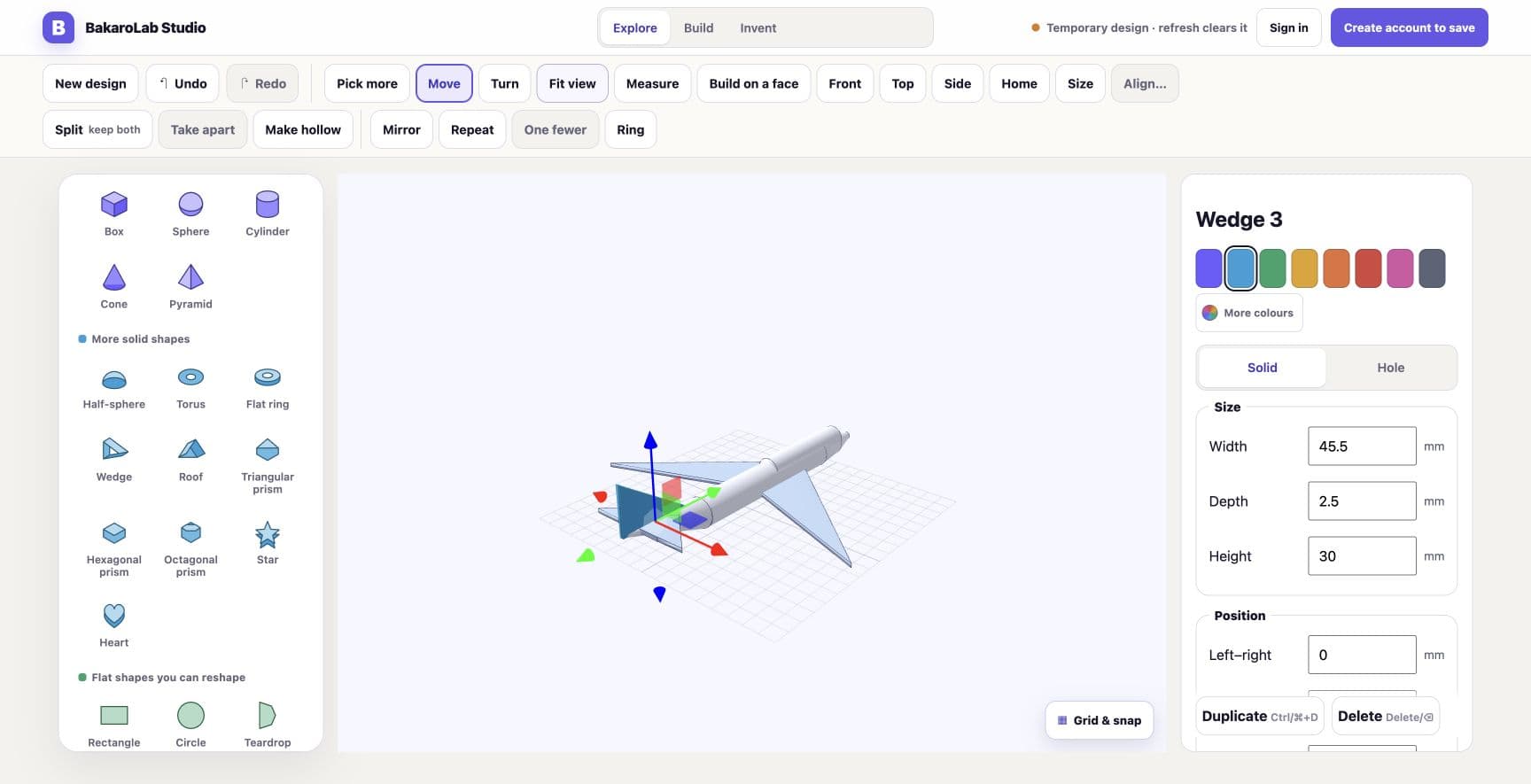
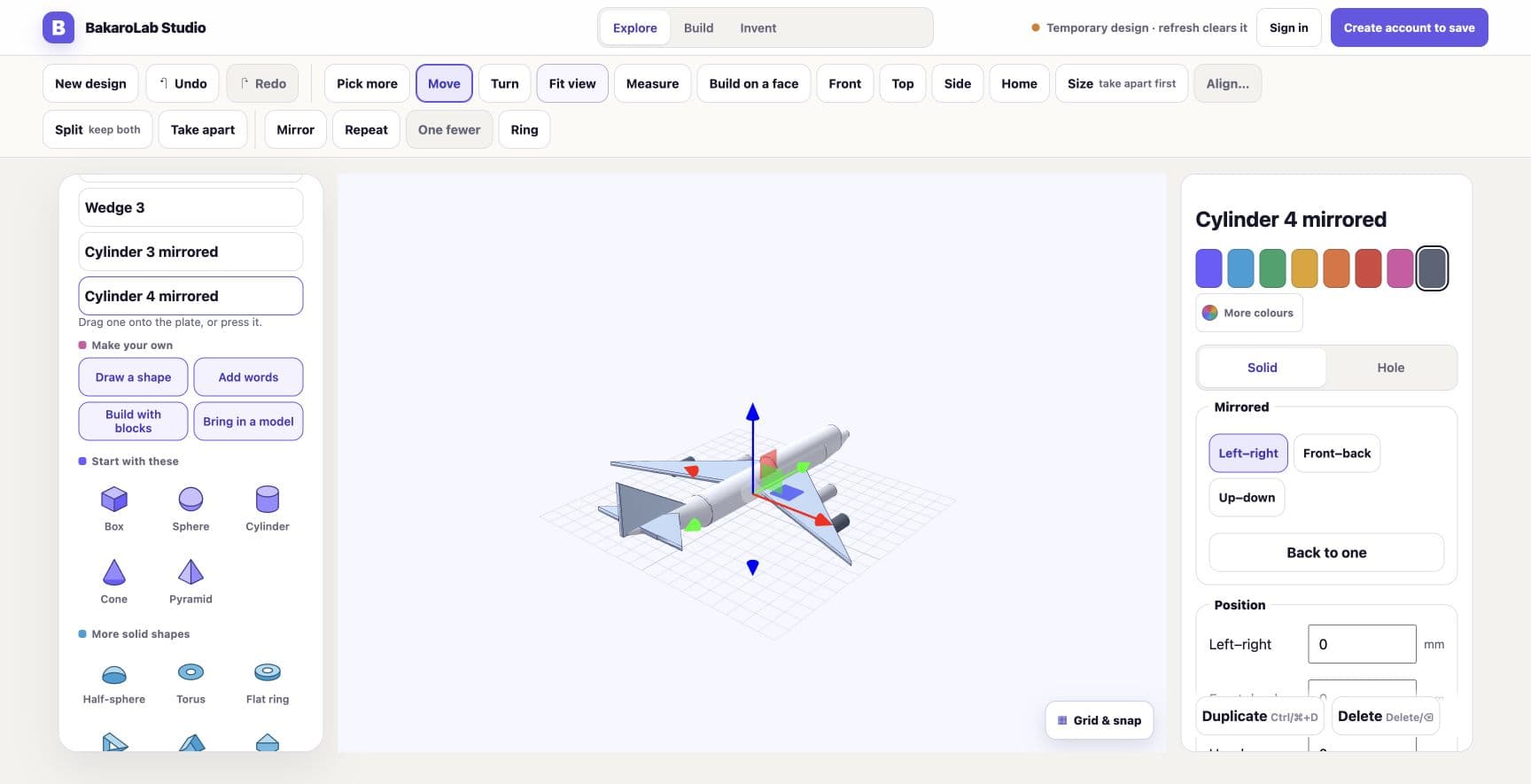
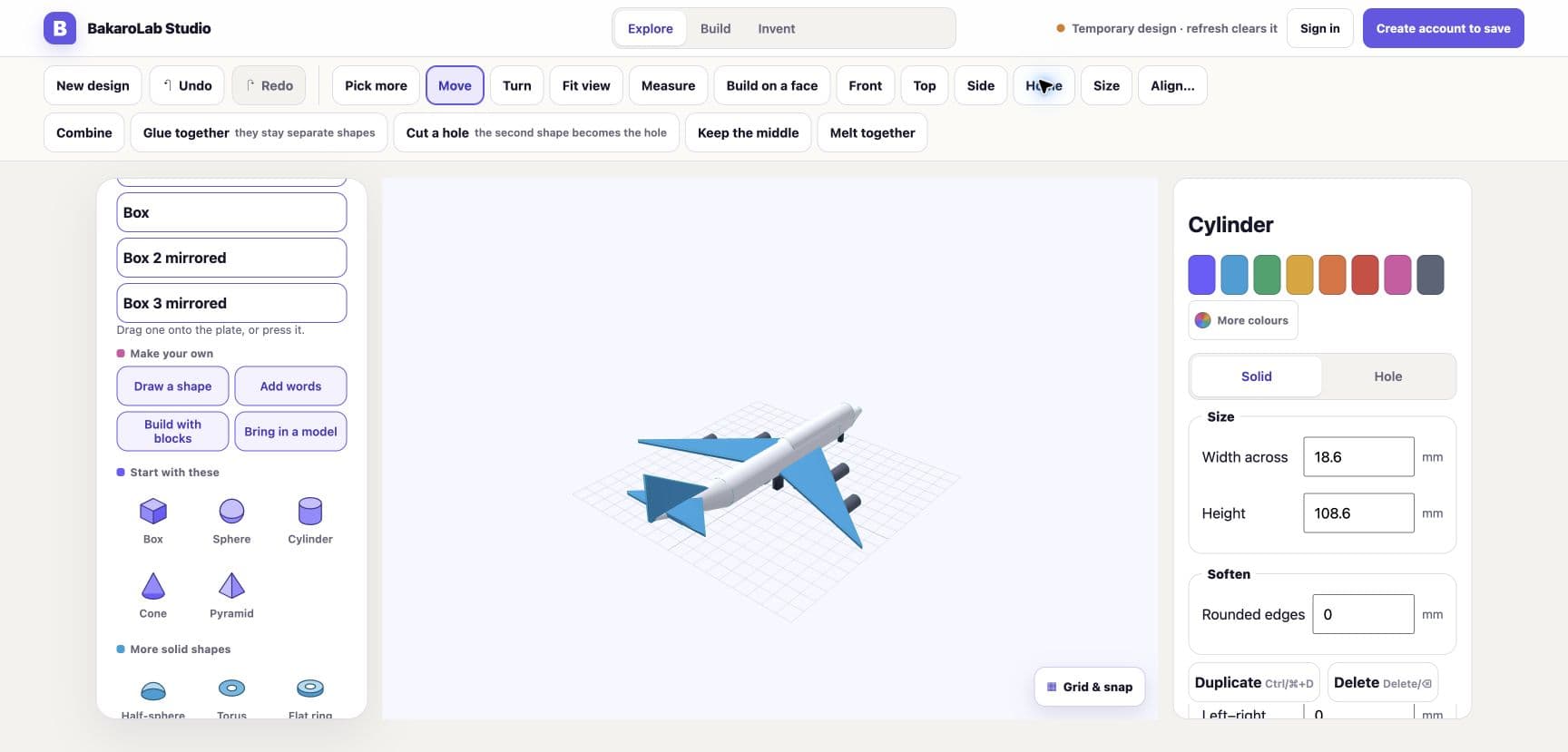
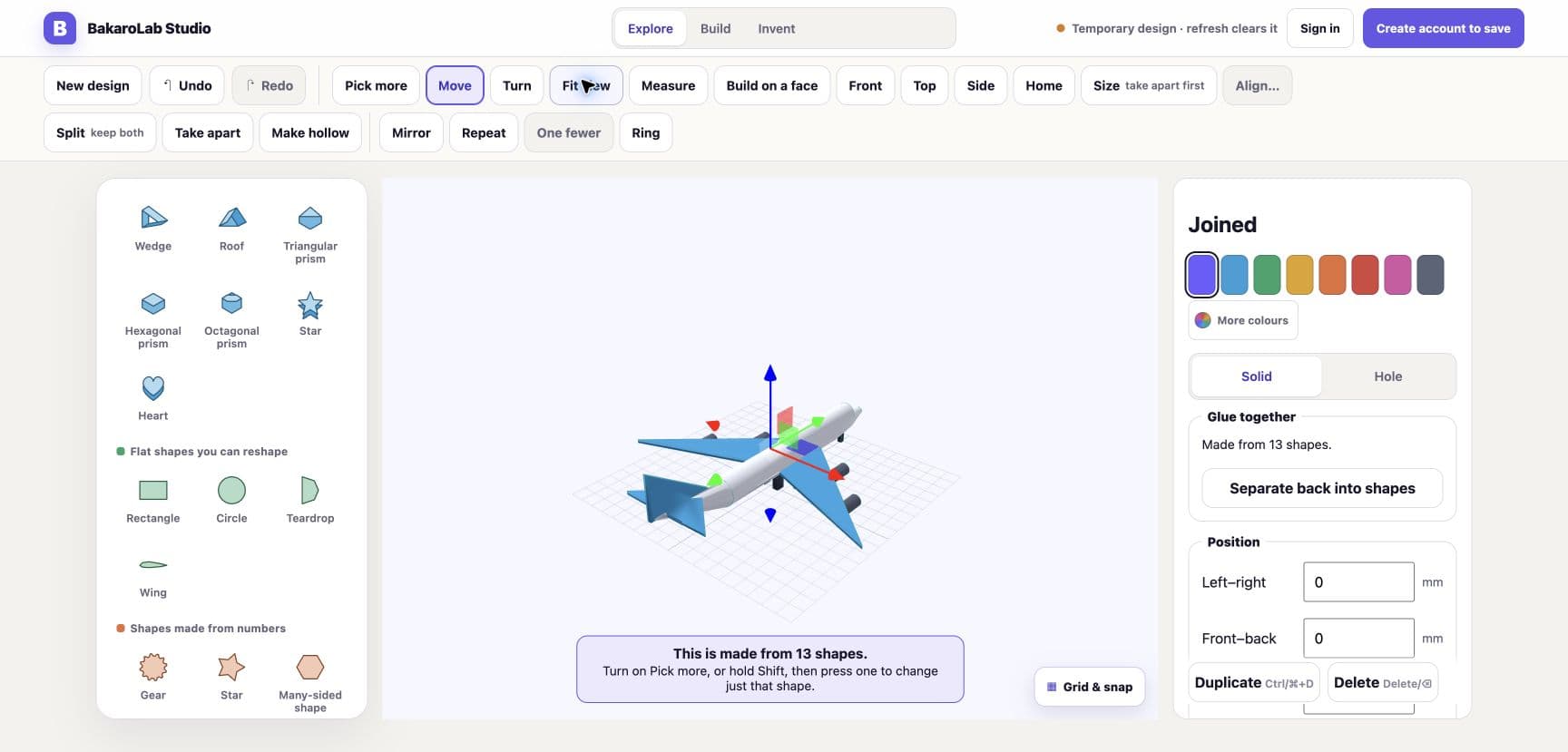
01 / 10An empty plate and one question: what do you want to make?
The need
Teenagers get offered a toy or a trade tool. Neither fits.
One kind of software lets a young designer push blobs around and print something the same afternoon. It is generous with delight and gives back nothing that transfers — no units, no constraints, no idea why a wall thickness matters.
The other kind is professional CAD, where the first hour goes on sketch planes and the second on giving up. The capability is real, but it is gated behind a vocabulary a fourteen-year-old has no reason to have learned yet.
The gap between those two is where a curious teenager actually lives: able to think in three dimensions, unwilling to earn it through a manual first. BakaroLab is built for that person specifically, rather than for a younger child or a working engineer.
The design
Make the easy start real, so the hard part is worth reaching.
01
Shapes first, numbers second
A beginner starts by dragging a cylinder onto a plate, because that is a thing a person can do on their first afternoon. Millimetre fields are right there when the work starts to need them, so precision arrives as a tool rather than as a toll gate.
02
Real geometry, not a lookalike
Solids are combined, subtracted and hollowed by a real CSG kernel compiled to WebAssembly and run in the browser. What the student sees on screen is the same object the file describes, which is what makes the skill transferable to professional CAD later.
03
Print checks that tell the truth
The studio reports honestly whether a design will survive being printed, including when the answer is unwelcome. A tool aimed at learners has more reason to be straight about failure, not less — the disappointment is the lesson.
04
A file the designer owns
Work exports as 3MF or STL. It leaves in a format any slicer or CAD package will open, so nothing a student makes is trapped inside our product.
How it reaches people
Two ways in, and one of them asks students for nothing.
On your own
Individual subscription
Fourteen days free, then $8.99 a month or $79 a year. Every lesson, every print check and every export is included from the first day — there is no tier that withholds the part that teaches.
Through an institution
Classroom programmes
Schools, camps and museums arrange a programme with us directly and are invoiced as an institution. Students join with a code from their teacher: no email address, no password, no card. A minor should not have to open an account to be taught something.
Built with
A real modelling kernel, running in a school laptop's browser.
The constraint that shaped the build: it has to run on whatever hardware a classroom already owns, without an install, an admin password or a graphics card. That is why the kernel is compiled to WebAssembly and the whole studio is a browser tab.
Open it and build something.
The studio runs without an account — a design you start straight away is temporary, and refreshing clears it, which is the honest trade for asking nothing up front.